Orientation with Artificial Intelligence: Welcome to Our New Colleague
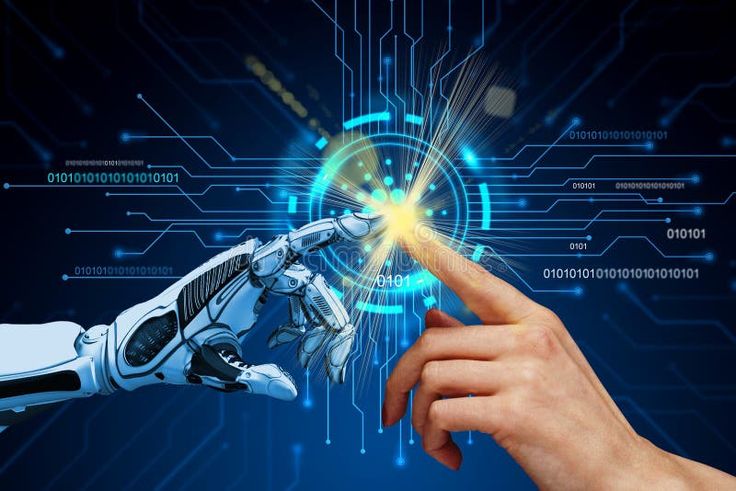
Getting Started with Artificial Intelligence: Our New Colleague at Orientation! Artificial intelligence (AI) is now at the center not only of the technology world but also of working life. So what does this new age colleague bring us? Will it take our jobs away, or will it open the doors to entirely new professions? In this blog post, we explore in detail the impact of AI on the workforce, its transformation in HR processes, how employees should prepare for the future, and the data from leading research organizations on this topic.
From Past to Present: Changing Work Life with Technology
Where Does the Fear of Machines Come From?
With the Industrial Revolution that began at the end of the 19th century, the introduction of steam engines and automation initiated a great transformation in work life. The transition from agricultural production to industrial production changed the job descriptions and skill requirements of millions of workers. The machine-human dilemma became apparent for the first time during this period.
We are experiencing a similar fear today with artificial intelligence. Just as digital data management has replaced archivists in the past, today some jobs are evolving.
Today's Reality: Orientation with Artificial Intelligence
Nowadays, artificial intelligence is beginning to take its place not only in technical departments but also as a substitutable workforce in many different areas such as human resources, law, finance, and marketing. However, this means not only a change in tasks but also in the way work is done.
According to the Survey, Concerns are Decreasing
In our survey conducted with 126 participants via LinkedIn, 59% of participants responded that "AI will not take my job away". This data indicates that in the business world, there is a trend towards adaptation rather than fear.
Human Resources and Artificial Intelligence: Is Collaboration Possible?
David Green's 2024 compilation “People Analytics” shows that this transformation is now on the agenda not only for technology teams but also for HR professionals. With the help of artificial intelligence;
Biases can be reduced in candidate evaluations
Performance predictions can be made more accurately
Competency analyses can be personalized
The New Role of HR: Strategic Partnership
According to Deloitte's 2024 Human Capital Trends report, HR is now taking on a strategic role rather than an operational one. HR departments must be guiding not only in recruitment but also in skill transformation processes.
Which Skills Will Be Valuable in the Future?
According to the World Economic Forum's 2023-2027 Future of Jobs report, the skills that will stand out in the business world include:
Analytical thinking
Creative problem-solving
Technological literacy
Ability to adapt
Digital collaboration skills are also included.
In addition to this, socio-emotional skills such as ethical awareness, leadership, curiosity, and resilience are also on companies' radar.
What Do Scientific References Say?
📌 Acemoglu & Restrepo (2019): While technological developments initially cause job losses, they lead to the emergence of new job definitions in the long run.
📌 Harvard Business Review (Chamorro-Premuzic): Suggests 7 strategies for adapting to GenAI: restructuring job descriptions, education, communication, etc.
📌 Oliver Wyman Forum: GenAI has complemented human skills. It has a wide range of applications from marketing to legal consulting.
📌 Upwork Insight Report 2024: The use of AI-powered productivity tools among freelancers has increased by 30%.
📌 Burning Glass Institute: There will be a change in job descriptions, not job loss. New roles such as data manager, AI trainer, etc., will emerge.
Will I Be Unemployed, or Should I Change Direction?
As the labor market transforms, the ability of individuals to keep up with this change is the key to staying within the economic system. The new generation of workers consists of individuals who can adapt to continuously changing job descriptions rather than fixed job definitions.
Conclusion: Instead of Asking, "Am I the Change?", Ask, “How Do I Adapt?”
The role of artificial intelligence in work life has shifted from being a topic of debate to a process where we seek the answer to how we can work together.
“The secret of change is to focus all your energy not on fighting the old but on building the new.” — Socrates
Be Prepared in 3 Steps: Artificial Intelligence Adaptation Checklist
Analyze your current competencies – including digital awareness and technological literacy.
Acquire new skills – support your learning with online courses, micro-certifications, and AI usage guides.
Rewrite your job description – evolve into a role that works with AI, not just one that is supported by AI.
Resources
World Economic Forum – Future of Jobs 2023
🔗 https://www.weforum.org/reports/the-future-of-jobs-report-2023/Deloitte – 2023 Global Human Capital Trends
🔗 https://www2.deloitte.com/us/en/insights/focus/human-capital-trends/2023.htmlUpwork – How Generative AI is Reshaping Work
🔗 https://www.upwork.com/research/generative-ai-impact-on-workHarvard Business Review – 7 Strategies for Embracing GenAI
🔗 https://hbr.org/2023/09/7-strategies-for-getting-employees-to-embrace-generative-aiBurning Glass Institute – Generative AI and the Workforce
🔗 https://www.burning-glass.com/research-project/generative-ai-and-the-workforce/